Posts
92Following
HiddenFollowers
Hidden
 repeated

Matthias Weiler
mjw@tyrol.social
In der osttiroler Gemeinde Schlaiten wird kein Windpark gebaut. Die Aussendung des Bürgermeisters dazu ist lesenswert.
https://schlaiten.gv.at/buergerservice/neues-informatives/projekt-abgesagt.html
 1
3
1
3
 0
repeated
0
repeated

heise online
heiseonline@social.heise.deDiese Daten geben ChatGPT, Gemini, Claude und Co über uns an Dritte
Eine neue Studie zeigt, wie ChatGPT, Claude, Gemini und Co. Nutzerdaten an Dritte weitergeben – teils sogar Zugriff auf ganze Chatverläufe und sensible Infos.
#ChatGPT #Claude #MicrosoftCopilot #Datenschutz #DeepSeek #Netzpolitik #Tracking #news
0
2
0
repeated

SFSCON
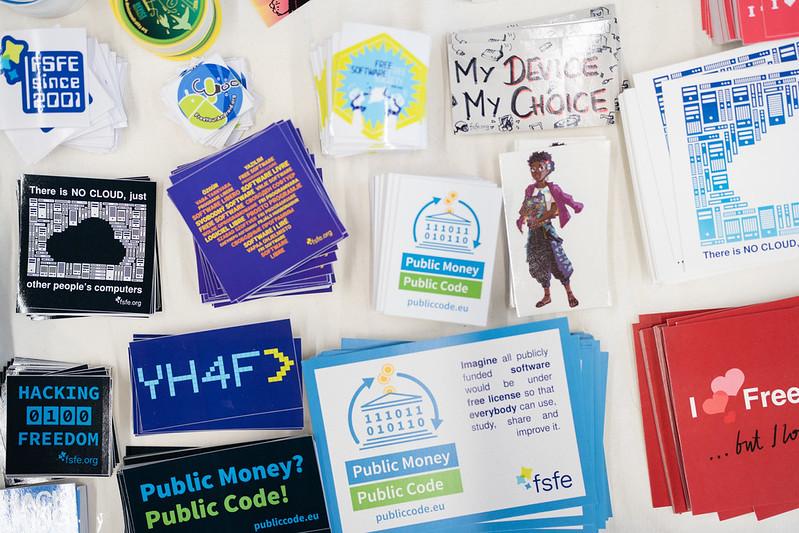
sfscon@mastodon.social🧑💻Theme of the Year: Digital Sovereignty
Who controls the technologies we rely on every day?
As our lives become increasingly digital, questions of control, transparency and dependency matter more than ever.
At #SFSCON26 we'll discuss how #FreeSoftware can contribute to a more open, resilient and independent digital future.
What does Digital Sovereignty mean to you?
#DigitalSovereignty #OpenSource #SoftwareFreedom
 0
2
0
repeated
0
2
0
repeated

 repeated

baksignal
animesh@mastodon.social
"Programming is building a mental model. It is not mechanical code production. The shared mental model in developers' minds is the real product. A program is "living" only while the team understands this theory. When programmers leave, it becomes "dead". Without the original theory, new maintainers treat software as a black box, creating patchwork fixes that cause side effects and architectural decay."
Absolute truth.
Originally from Peter Naur's "Programming as Theory Building" (1985)
2
23
1
repeated


 repeated

Joanna Holman
joannaholman@aus.socialThe smartest piece of office behaviour I’ve ever seen was a coworker who used a picture of his home office as his background for teams meetings when in office so that people would assume he was WFH and not come find him in person to solve problems or chat
3
8
1
repeated

Tess, Reborn
Tess@chatty.frogawampus.co.ukthe BIOS competitions have been renamed to the UEFI champions league
1
2
0
repeated

Sebastian Lasse
sl007@digitalcourage.socialMeta sperrt Werbung für Virginia-Woolf-Theaterstück wegen Feminismus
0
3
0
repeated

Sonja Lemke
sonjalemke@ruhr.socialIch, erste Sitzungswoche nach der Sommerpause:
 0
2
0
repeated
0
2
0
repeated

Aure Free Press 
Free_Press@mstdn.social
ENJOY YOUR LABOR DAY WEEKEND!
#AureFreePress #News #laborday
2
5
0
repeated

Lorenzo
ljs@mastodonapp.ukGuy slops totally broken series using the cheapest LLM he can find.
Guy finds it's broken, blames upstream kernel, slops a totally broken 'fix'.
Guy argues back and wastes time of maintainers who keep telling him it's surely his patch.
Maintainer goes and finds broken patch and explicitly points out how it's broken.
2026 everybody...!
4
1
0
repeated

Steve Woods
wood5y@mastodonapp.uk"LibreOffice 26.8 contains no generative AI features. Documents are never transmitted to remote services and no component requires network access to function. The suite includes no advertising, no telemetry, no subscription and no account requirement, unlike some well-known proprietary office suites."
0
17
1
repeated
Jonathan Corbet
corbetIncluded therein was this text: "Why I'm the right person for this: [I'd fill this in with your own background here — e.g. kernel contribution history, mailing-list involvement,
relevant professional experience, or prior writing]"
It forgot to tell this person to point out their attention to detail as well.
3
16
59
Richard Weinberger
rwhttps://sigma-star.at/blog/2026/08/go-runtime-netpoll-bug/
0
0
1
repeated

 repeated

LUG Vorarlberg
lugv@troet.cafeDas Programm für den #LinuxDayAT 2026 in #Vorarlberg steht! Wir verzeichnen einen neuen Rekord bei Einreichungen. Deshalb gibt es dieses Jahr erstmals 4 parallele Vortrags-Tracks. 🎉
Die Themen sind querbeet, es ist für alle was dabei. Wir sehen uns am 26. September in #Dornbirn
👉️ https://www.linuxday.at/vortraege/2026
Die Raumnummer für den "???" Raum wird später noch ergänzt.
 2
3
0
repeated
2
3
0
repeated
LUG Vorarlberg
lugv@troet.cafe🤫 Psssst, bist du am 26. Sept. am #LinuxDayAT in #Dornbirn, kennst die Veranstaltung ohnehin schon und wärst bereit, ein wenig auszuhelfen? Super, wir suchen genau dich!
Da wir diesmal mehr Räume bespielen als sonst, ist unser ohnehin kleines Team definitiv zu klein.
Mehr Info findest du hier: https://www.lugv.at/raumbetreuerinnen-gesucht 👈️
1
2
0
repeated