

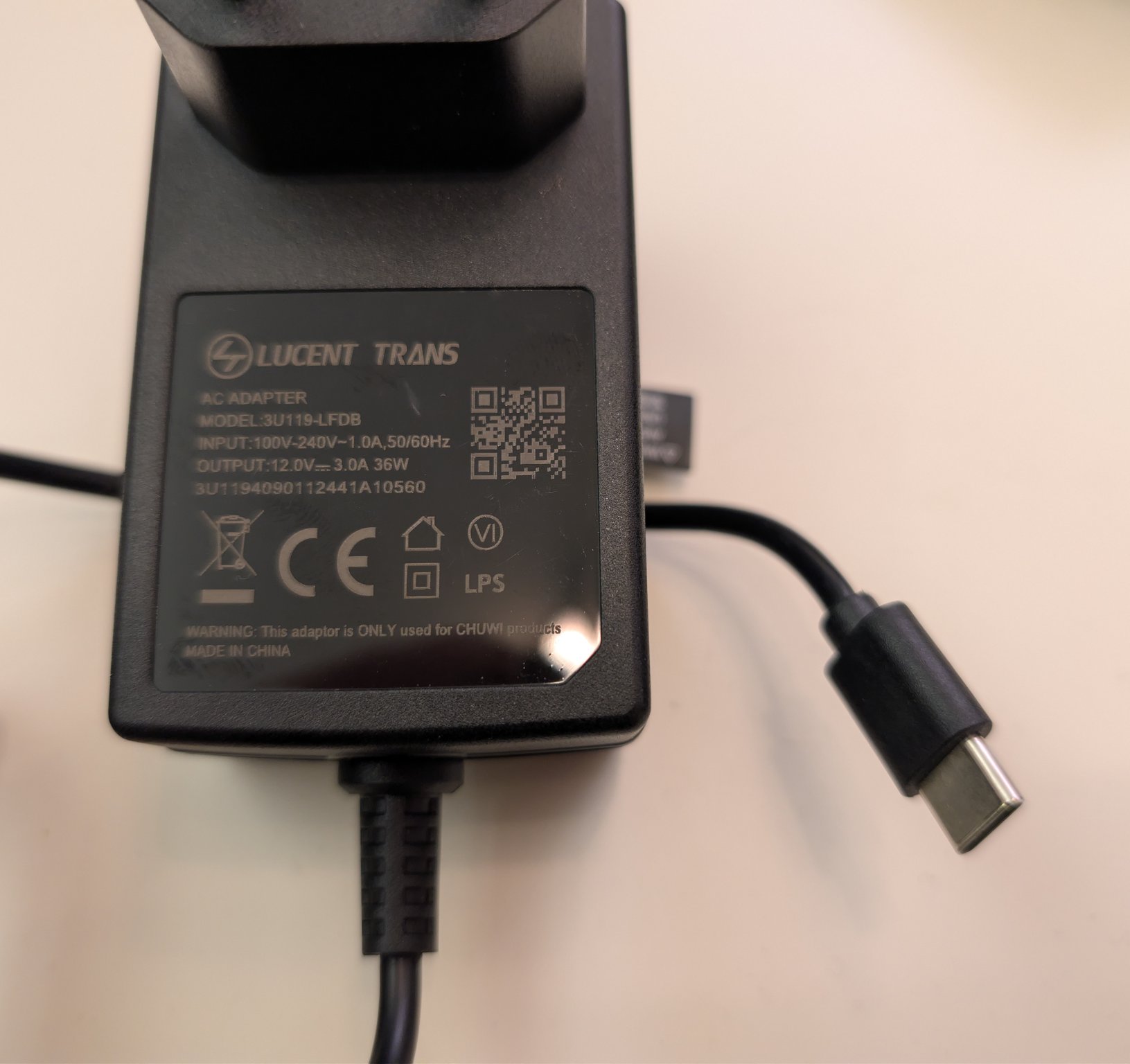
No power delivery, no negotiation, just 12V straight to VBUS
You surely wouldn't regret having a USB-C plug with 12V on VBUS around.
 8
8
 6
6
 2
2






Sarah [7252]
Exilsarahl@chaos.social@derf Chuwi... I have some Chuwi Surface clone with a 12V PSU, USB-C without PD.
There seems to be a patten.
Label this cable with a warning!
1
0
0

kloenk
kloenk@catcatnya.com@Exilsarahl @derf EU sagt es braucht USB-C, aber nur von der physischen Größe?
1
0
0
Sarah [7252]
Exilsarahl@chaos.social
1
0
0



Pavel Machek
pavelI guess you should not try, because it may be out of spec for the devices, but old Nokia phones were designed for 5V charging, but were actually designed to survive 15V IIRC according to service manuals.
I'd strongly suggest anything USB to survive 20V these days, and may guess is that a lot of hardware would actually survive.
1
0
1

Manawyrm
manawyrm@chaos.social@pavel yeah, no, definitely don't try this.
proper USB-C negotiation chips will prevent this crap from doing any harm, but 90% of 5V devices have no Vbus MOSFETs, they just have the 2x 5.1kOhm resistors and that's it.
If you connect them to 12V, you'll let the magic smoke out. Quickly.
0
0
1
Arcane Roops
arcaneoverflow@techhub.social@pavel @derf We seem to have different points. Some people reading may not realise it's a very bad idea to stuff the wrong voltage into the charging port, just because it looks the same (which has previously been the point with USB Type-C, after all). Earbuds and torches are the obvious examples, but although my laptop negotiates 20V, it also charges (very slowly, overnight) from a basic 5V supply. I wouldn't risk passing in 12V that hasn't been requested via PD :-)
1
0
1


Babberbupts 🦆
batterpunts@mastodon.social@derf i don't understand electrical stuff well, my iphone charger says the basically the same thing, "output: 5V or 9V or 12V"
how do you know this one's a killer
1
0
0
Those devices will never request more than 5V, but if a power supply delivers 12V regardless, the magic smoke is sure not going to go back into device once it's done smoldering.
0
0
1
Pavel Machek
pavel
0
0
0
Pavel Machek
pavel
1
0
0
✧✦Catherine✦✧
whitequark@treehouse.systems@pavel @derf I will for the next iteration of the thing I'm designing, exactly because of the prevalence of these horrible out-of-spec supplies; but I reverse-engineer a lot of consumer devices and I'm gonna tell you that basically only those which actually use higher voltages to charge seem to have any protection against Vbus overvoltage that I've seen. (I'm not perfect at RE and I usually only give limited attention to power circuitry but protection does stand out a bit)
1
0
0
✧✦Catherine✦✧
whitequark@treehouse.systems@pavel @derf polyfuses don't work for this (by the time the fuse actuates, something important has already died) but there are cheap protection solutions out there. unfortunately you have maybe 50c for the IC and then 50c more because you need one more PnP feeder, and maybe a few cents here and there because of yield, overheads, etc and not a lot of vendors are likely to do this just for funsies
0
0
1

Fiona 

Fiona@blahaj.zone
@derf Yet another reminder that CE is just a declaration by the manufacturer, not a certification.
That said, I severely doubt that this is compliant with CE, so maybe this could still open them up to charges?
1
0
0

Chao-c'
xChaos@f.cz@derf I think this is kind of revenge to EU. It said "let's standardize USB connectors to USB-C". Which was not so bad idea. But corporations somehow invented revenge: "ok, so we are now expected to use this connector for EVERYTHING? Hold my beer!"
Enforcing certain connector should definitely include prohibiting its use for anything else. "High voltage" above 50V is actually quite regulated, the power sockets, or so. The problem with regulation is that once you start, you have to enforce it and prohibit compliant-looking, but actually killer devices like this charger...
0
0
0