Conversation


Jarkko Sakkinen
jarkko
@caesarcattus ARM version is still quite new :-) i recall it came maybe 2024'ish.
 0
0
 0
0
 0
0
Jarkko Sakkinen
jarkko
Edited 21 days ago
@caesarcattus QEMU is great tool for learning and actually C compiler is too. If I need to learn a new uarch, I usually just compile a random program and look and simplify the resulting code.
With GCC/LLVM you get the assembly source code with "gcc -S -fverbose-asm hello.c".
With GCC/LLVM you get the assembly source code with "gcc -S -fverbose-asm hello.c".
0
0
0
Jarkko Sakkinen
jarkko
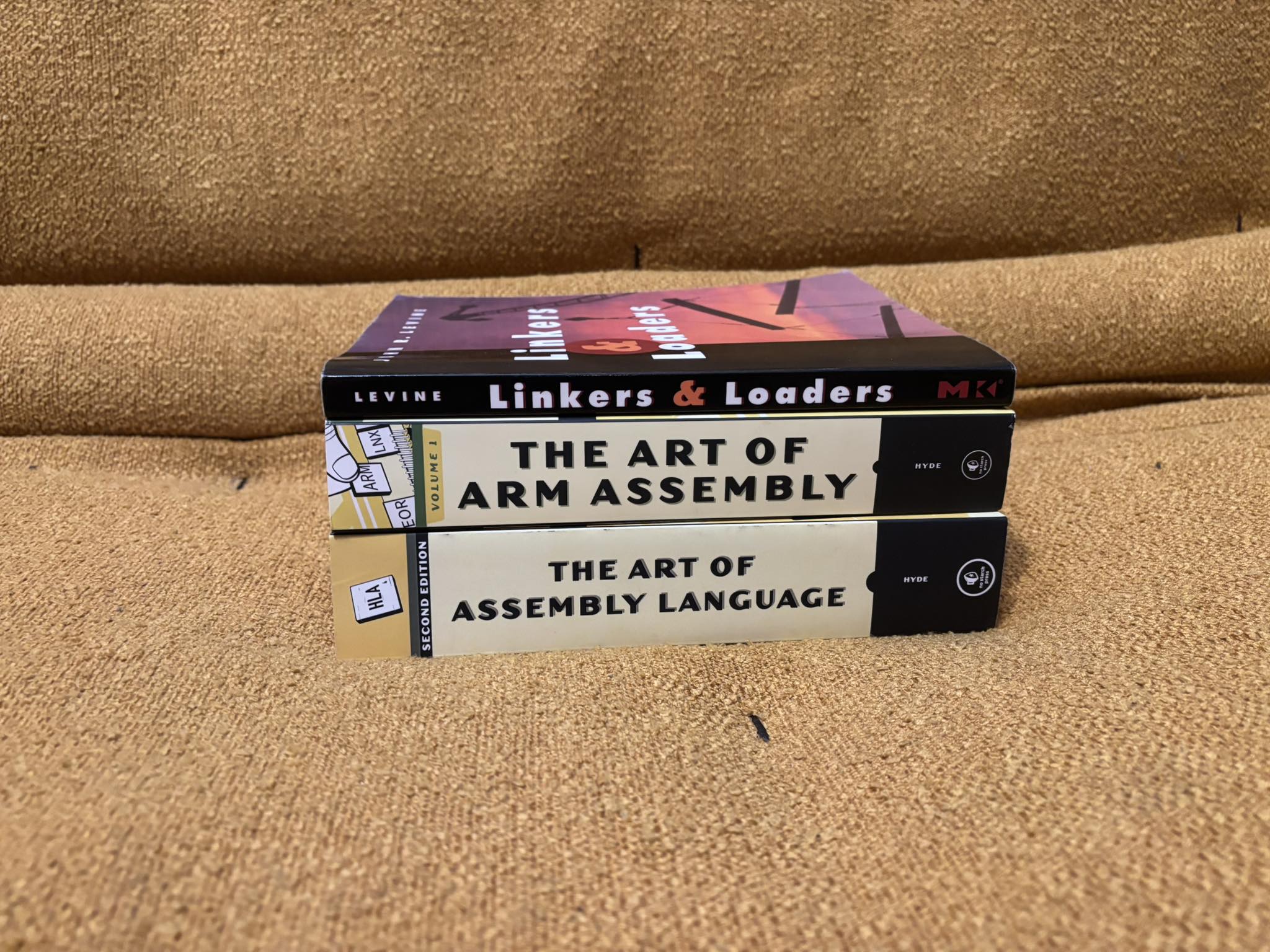
@caesarcattus If it helps you, I personally would have never learned in the first place by reading the art of assembly books above. I'm more like "blackbox learner" when something is way too complex to cope. E.g., if I get a huge pile of source code, the first thing I do is to run tools like strace, maybe some temporary log messages here and sometimes bpftrace. Then I might try to figure next what are "sources" and "sinks" i.e., how it does I/O. Once you do that for a while even something quite messy starts to make sense.
0
0
0