
Longhorn
never_released@mastodon.social
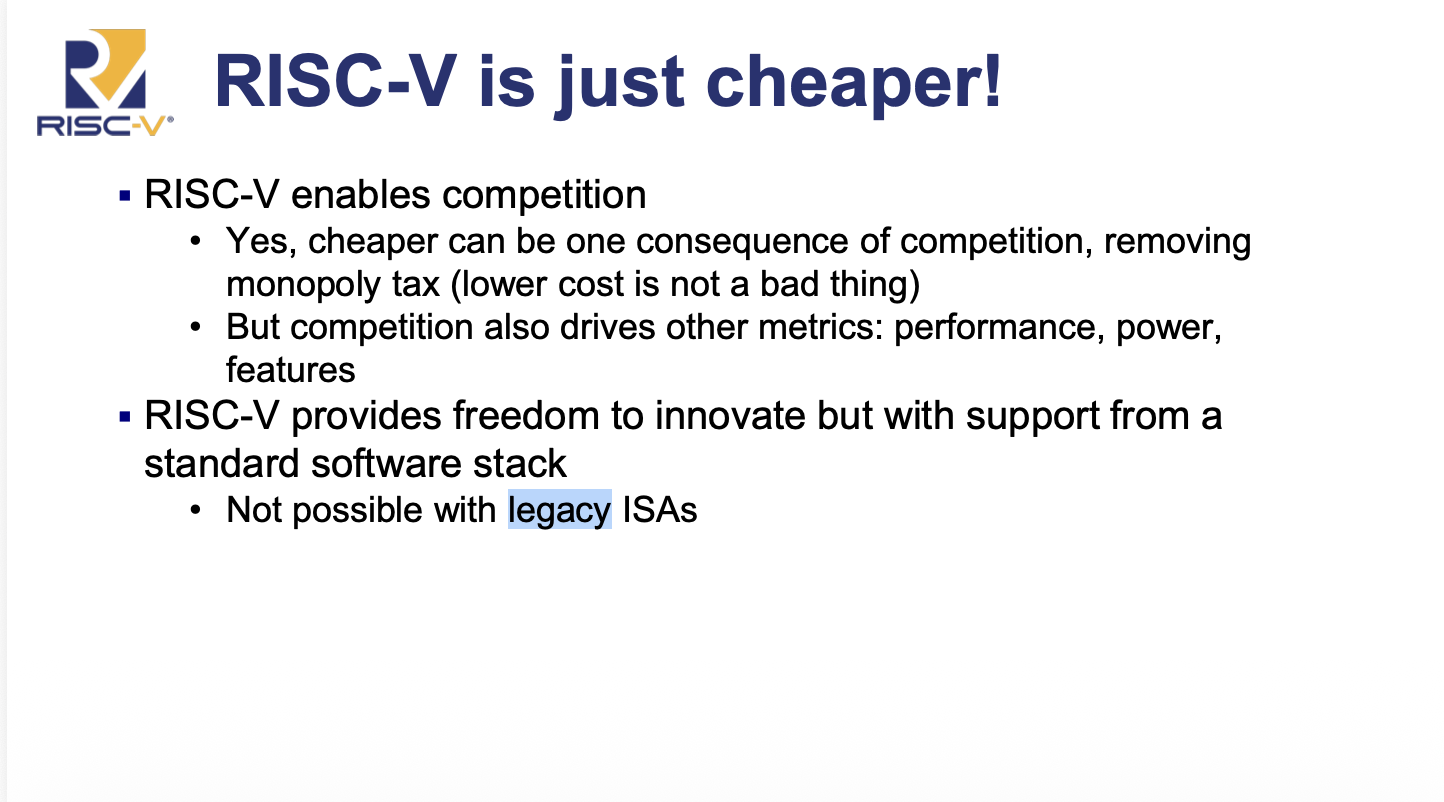
Claiming that other ISAs are "legacy" when those other ISAs have 100% marketshare (literally) on desktop, laptop _and_ server APs is truly something to behold
wait at least until there's somewhat of a foothold before claiming _that_
 3
3
 1
1
 0
0

Netzblockierer
Netzblockierer@tech.lgbt
@never_released EXACTLY!
I've seen more #SPARCv9 that was deployed post - #Oracle's 'hostile takeover' than #RISCv in the wild…
The only thing RISC-V is good at is undercutting ARM M0 and other tiny, low-end chips…
1
0
0

NerdNextDoor 
mrmasterkeyboard@mastodon.social
@Netzblockierer @never_released i've always wanted to get into SPARC... it seems like an interesting ISA and one day i want to make my own based on SPARC's specifications
1
0
0
Longhorn
never_released@mastodon.social@mrmasterkeyboard @Netzblockierer Register windows ended up being a bad idea in any deployed machine, especially the minimalistic SPARC ones
Itanium had more complex rotating register windows with looping support and those might have worked better... but no in-market ISA retains the idea
0
0
0

Marcin Juszkiewicz 🙃
hrw@society.oftrolls.com@never_released I like that part when competition drives performance.
RISC-V is faster then year ago.
But still it is only faster. Not fast.
1
0
0
Marcin Juszkiewicz 🙃
hrw@society.oftrolls.comOne day, when new RISC-V SoC will be comparable with middle range AMD Ryzen, we can talk about RISC-V being worth looking.
2
0
0

Palmer Dabbelt
palmerEssentially they're telling all these hardware companies "just go put random custom stuff in the ISA and don't worry about it, the software will just work itself out". Then they go build these crazy things, find that there's actually no market there, and go out of business.
0
0
1

penguin42
penguin42@mastodon.org.uk@hrw @never_released I was about to say that if they need to know how to 'write a $ARCHITECTURE sucks' post then you're the best person to ask :-)
1
0
0

Pavel Machek
pavelIt would be very cool to have risc-v. For me, threshold of useful desktop computer is Thinkpad X220 at the moment. Hopefully we'll get there soon.
1
0
1
Marcin Juszkiewicz 🙃
hrw@society.oftrolls.com@pavel @never_released in the MCU area I do not care much what's inside of CPU.
I choose one which has what I need. RP2040 for keyboards, ESP32 for home sensors etc.
1
0
0
Marcin Juszkiewicz 🙃
hrw@society.oftrolls.comWell. I would not say that RISC-V architecture sucks. Because that's too simple phrase.
It is still in "growing up" phase. Lacks fast hardware, lacks server class hardware.
Has terrible mess with ISA extensions. But creation of RVA23 kind of sorts that out by creating a new base.
Any new SoC will be RVA23. Which is better situation than AArch64 has - we cannot drop v8.0 due to amount of chips.
0
0
0
Pavel Machek
pavel
1
0
2
Marcin Juszkiewicz 🙃
hrw@society.oftrolls.comIt all depends on definition of "desktop". Some would say that both Arm and RISC-V are there, some will say that none of them were there yet.
For sure RISC-V is not yet in "a proper server" space. The "boring" one: unpack, put in rack, connect, press power, install OS, use.
1
0
0
Pavel Machek
pavel
0
0
0