Jarkko Sakkinen
jarkko
OK, something probably pretty basic with #QEMU I need to ask.
I have this command-line, which is generated by #Keystone #RISCV #TEE build:
/home/jarkkojs/work/keystone/qemu/build/riscv64-softmmu/qemu-system-riscv64 \
   $DEBUG \
   -m 2G \
   -nographic \
   -machine virt,rom=/home/jarkkojs/work/keystone/build/bootrom.build/bootrom.bin \
   -bios /home/jarkkojs/work/keystone/build/sm.build/platform/generic/firmware/fw_payload.bin \
    \
   -netdev user,id=net0,net=192.168.100.1/24,dhcpstart=192.168.100.128,hostfwd=tcp::${HOST_PORT}-:22 \
   -device virtio-net-device,netdev=net0 \
   -device virtio-rng-pci \
   -smp $SMP
QEMU has support for #Spike, which is #CVA6 emulation.
So when I do to the above command-line simply s/virt,/spike,/g, I get this error:
$ build/scripts/run-qemu.sh
**** Running QEMU SSH on port 3617 ****
qemu-system-riscv64: Property 'spike-machine.rom' not found
How do I end up to this error message? Why does it seek a filename like that? Without rom= I can run Spike emulation but I need that bootrom for the application.
 1
1
 1
1
 0
0
Jarkko Sakkinen
jarkko
0
0
1
Jarkko Sakkinen
jarkko
0
0
0
Jarkko Sakkinen
jarkko
1
0
0
Jarkko Sakkinen
jarkko
0
1
2
Jarkko Sakkinen
jarkko
0
0
0
 repeated

Inkscape
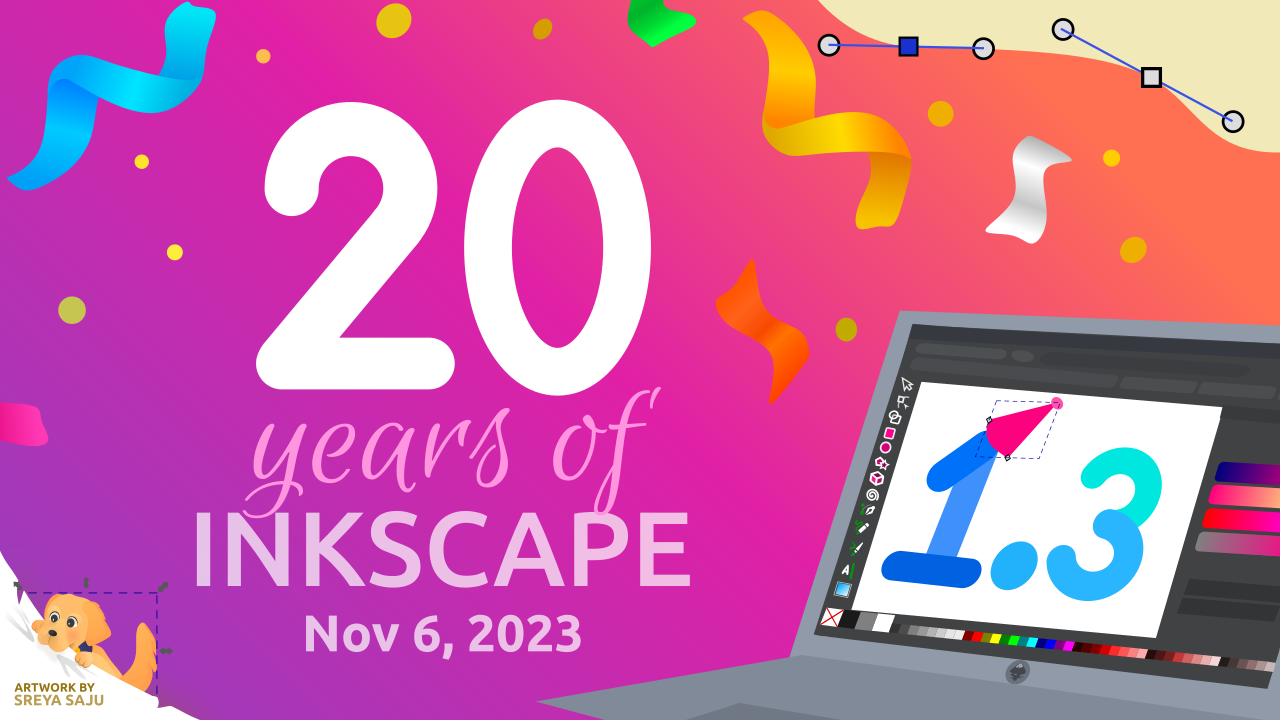
inkscape@mastodon.artHere at the Inkscape Project, we're excited about our upcoming milestone... we're turning 20 in November! 🎉
Watch for an opportunity to learn more about some of our contributors later in November.
For now, we're hoping to collect your best wishes and what you've achieved through using #Inkscape for sharing with our contributors and the community (open until Oct 31):
https://office.inkscape.org/nextcloud/index.php/apps/forms/s/cc5Jy4FwbkbkWqweGCkAQRTp
 0
4
1
repeated
0
4
1
repeated

Free Software Foundation
fsf@hostux.socialProtect developer freedom. Abolish software patents. Learn why software patents are unjust by checking out the new design of our #endsoftwarepatents initiative. https://u.fsf.org/3f-
 0
1
1
0
1
1
Jarkko Sakkinen
jarkkoI’ve opened up #development #git tree for in-kernel #Keystone #enclave #driver:
https://git.kernel.org/pub/scm/linux/kernel/git/jarkko/linux-riscv-keystone.git/
Existing branches:
keystone: follows Linus’ tree.keystone-5.19.y: I’m actively trying to get Genesys2 FPGA hosting CVA6 working with this kernel version. Buddy allocator works but the use ofdma_alloc_coherent()to allocate contiguous physical memory for enclaves freezes the system when it is being used (not in the call itself).
Keystone enclaves are applications hosted by Keystone security monitor running inside #OpenSBI, and partitioned and protected by physical memory protection (usually shortened as PMP) machine registers.
PMP is part of standard RISC-V ISA, which means that Keystone enclaves are usable with any RISC-V CPU with MMU. There is nothing that would prevent this coming eventually a mainline feature because it works for without non-standard or proprietary components involved.
Another favorable element of having Keystone enclaves as kernel feature is that Keystones enclave can run both in U-mode and S-mode meaning that kernel subsystems could use the feature too (if wanted). For instance, #Intel #SGX can host only ring-3 enclaves, which limits its scope.
2
0
2

Jarkko Sakkinen
jarkkoWrote myself a cheat sheet on how to get #unprivileged #Nix up and running because had forgotten how to do it. I like my Nix this way, i.e. a #container tool for me that actually makes sense to me I guess, and fits for my needs.
0
1
2
Jarkko Sakkinen
jarkko
2
0
0