
Posts
90Following
12Followers
130
Pavel Pisa
ppisa
@ozzelot @vbabka Yes the Teams has been directive chosen as required technology by #CVUT VIC after the firs period of open experimentation with different technologies for the COVID enforced distant education. We (at #CVUTFEL) have big advantage that our IT team has been able to setup/build #BigBlueButton instance in less than two weeks. Its integration and ability to import and plan schedules, groups, attendees list directly from KOS system evolved into system incomparably superior to all Teams tools and VIC could not argue and stop that system. We like #BigBlueButton presentation mode so much that we use it even for regular in person #comparch lectures and provide recordings to our students. By the way, the free Microsoft’s offer of the Teams to schools at COVID has been Trojan horse to education systems, because it did allow to start meeting only manually at given time without paying for Evolution license. Only after paying license, the planning of meeting in advance and obtaining link to send is available as I know.
By the way, our VIC step into Microsoft slavery and #CTVUT management desire to provide identity even for alumni students would lead to life long payments for each alumni identity to Microsoft for each graduate who did not opt-out from identity systems. Or at least, I have heard that from one VIC employee responsible for users databases and #CVUT yellow pages.
I have found (from the public contracts registers) that #CVUT has paid about 80 mil. kč for Microsoft licenses directly and through traffickers companies from 2017 years. But problem is that part of that amount paid in the last years is 32 mil. kč after VIC decisions for the full outsourcing of identity management to the Microsoft Entra ID cloud. So we can expect even exponential growth of expenses for this kind of racketeering. And according to our highest majesty, National Cyber and Information Security Agency, #NUKIB office, it is OK that Microsoft does not obey European Union rules, see their Cloud computing - exceptions to data storage. So no care about Patriot Act and previous Microsoft behavior, older and more recent withdrawal of service to Chinese universities and at least abrupt data block to one company, etc.
 1
1
 0
0
 2
2
Pavel Pisa
ppisa
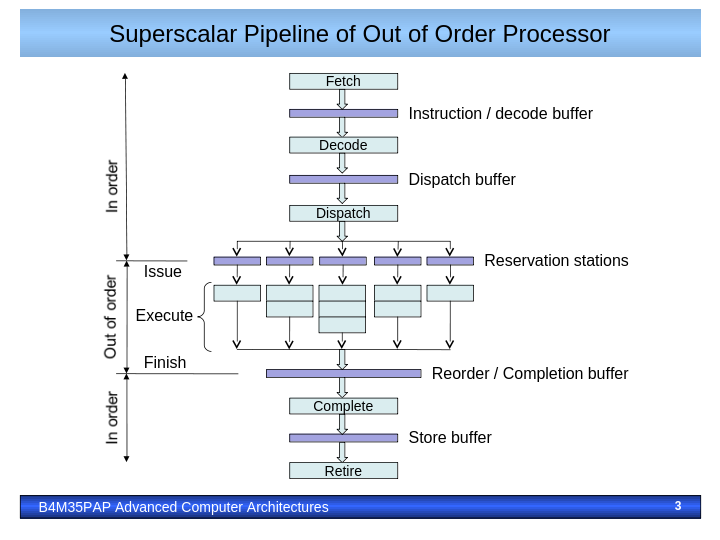
#CVUTFEL ( #CVUT FEE) Advanced Computer Architecture ( #comparch) course recodings of the first five lectures are published at #VHSky.cz. Czech language recordings from the 2021 round are available as well. The B4M35PAP course builds on the knowledge from the introductory #comparch B35APO course (recordings). Each student builds their own CPU design (tools and ISA are open). The #QtRvSim #RISCV educational simulator is provided for inspiration (online version and The Czech Technical University #comparch related courses guidepost https://comparch.edu.cvut.cz/).
P.S.: Help with tooling for transcribing the lectures in my Czenglish dialect into English subtitles would be appreciated, as well as all other forms of feedback. For the introductory course, we provide reusable LaTeX sources (CC-BY-SA license) that are open to pull requests.
 0
4
8
repeated
0
4
8
repeated

Jakub Jirutka 🇨🇿🇺🇦
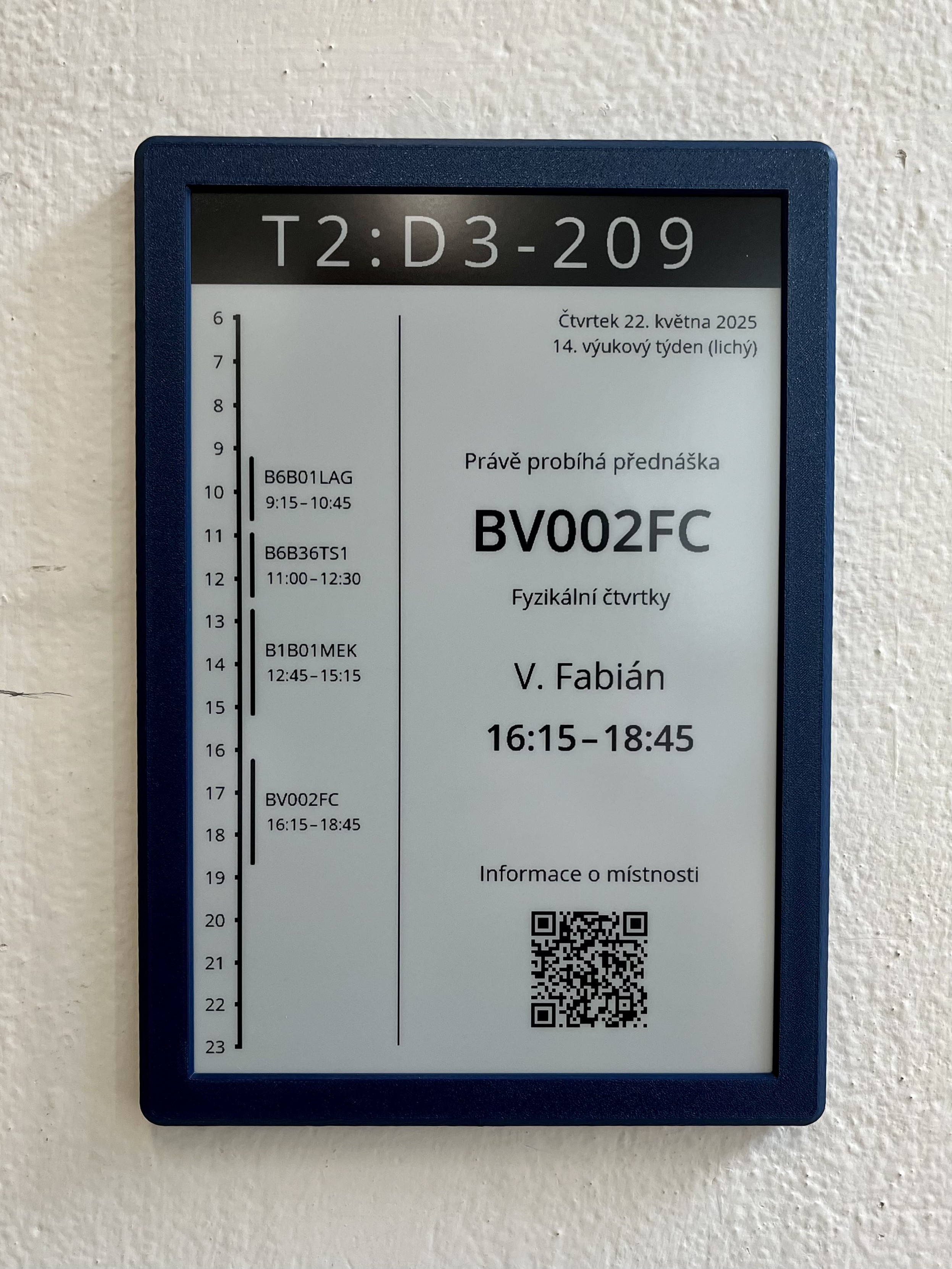
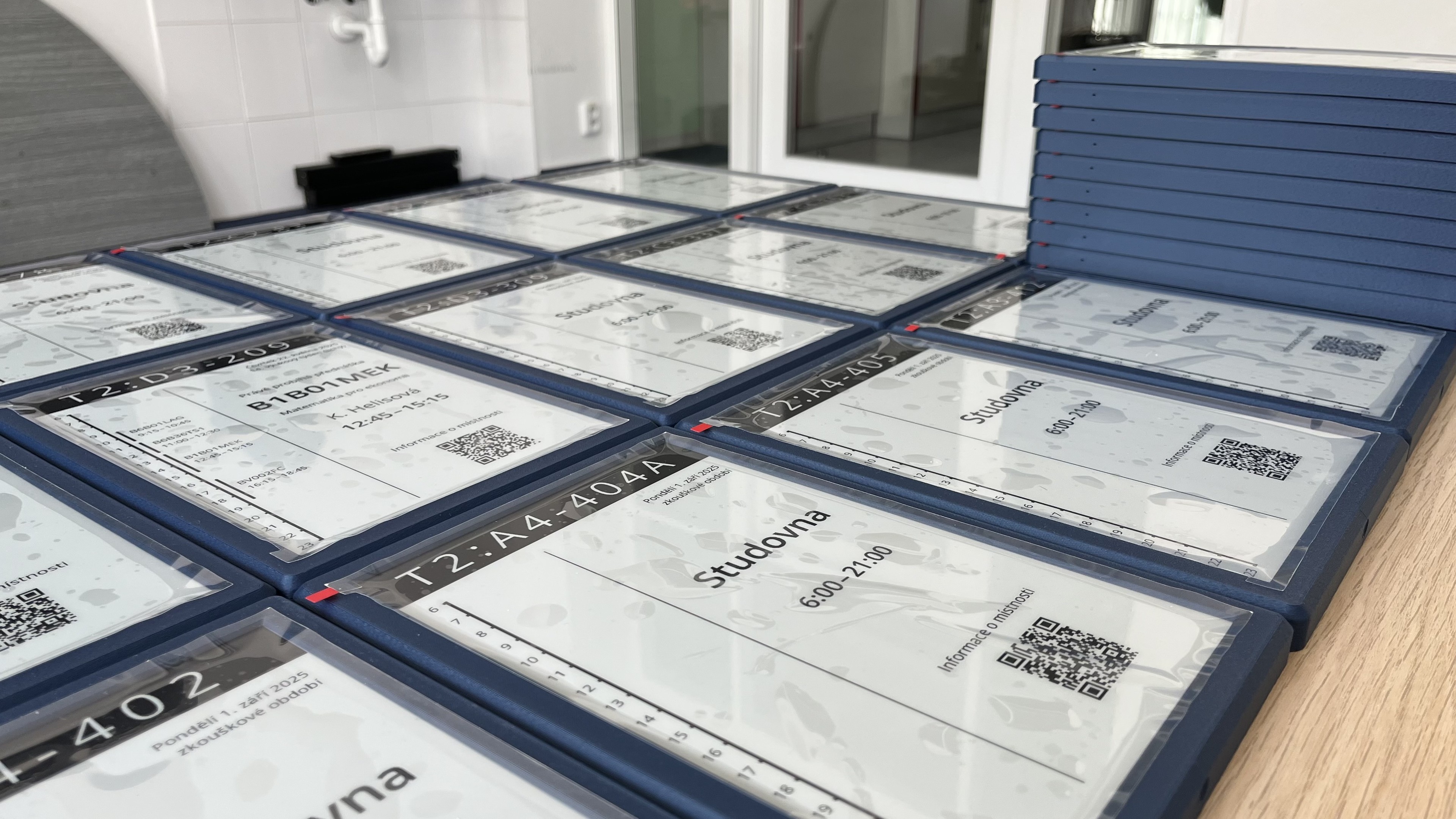
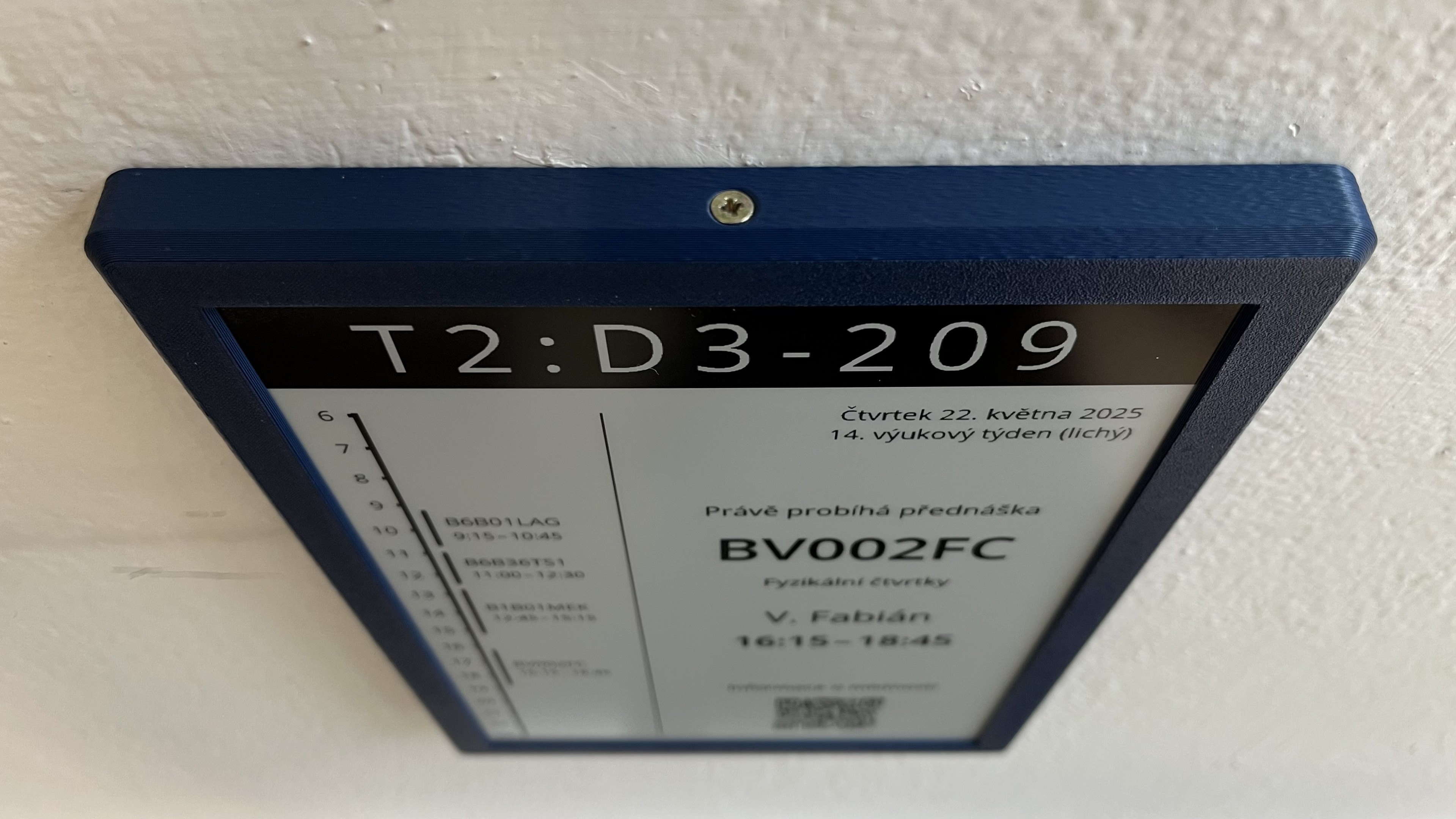
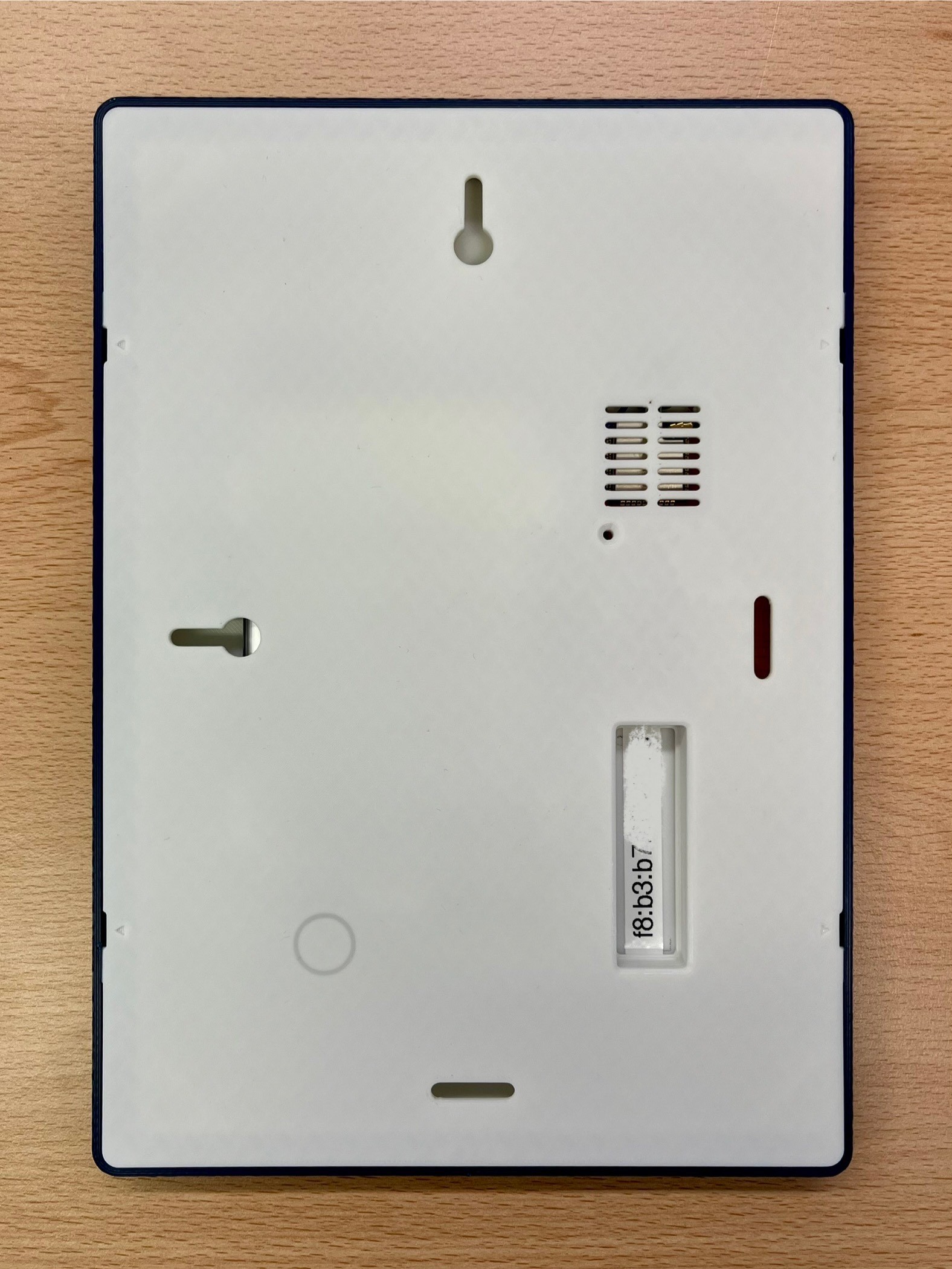
jakub@social.jirutka.czThis is what I’ve been working on for last months at #CVUTFEL – electronic door sign for classrooms. 10.2" e-ink display, ESPink #ESP32 board from #Laskakit, battery (for some), a custom case, firmware and control server. Receives images via MQTT, sends telemetry back. #IoT
The case was designed in FreeCAD and printed it on Prusa MK3S and Prusa Core One. Firmware is built on Arduino SDK with patched GxEPD2_4G lib. Control server is written in TypeScript and runs on NodeJS. It renders screens to 2-bit grayscale PNG and sends via Mosquitto.
The price is ~115 EUR of you order the e-ink display and battery directly from China.
Most of this is my work, from the hardware up to the control server and also monitoring. It’s a very interesting project, a nice change from what I normally do because it’s a physical object. :)
This batch is 32 pieces and they will be installed mainly in Dejvice this month.
 5
15
3
repeated
5
15
3
repeated
Jakub Jirutka 🇨🇿🇺🇦
jakub@social.jirutka.czMy talk is on the program, see you at @openalt!
https://talks.openalt.cz/openalt-2025/talk/ETAQ7X/
0
5
0
Pavel Pisa
ppisaApache #NuttX International Workshop 2025 will be held on this Thursday and Friday (16-17th October 2025) https://events.nuttx.apache.org/ It will be accessible on site (Costa Rica - home location of original author, Gregory Nutt) and online. The NuttX RTOS is POSIX based alternative for processor systems and MCUs where Linux kernel does not fit. But thanks to following POSIX and Linux principles it allows writing applications (with some care) which are easily portable between GNU/Linux, NuttX, RTEMS and other real POSIX alternatives. The list of supported platforms is extensive. The #PX4 Autopilot project which is part of vendor-neutral https://dronecode.org/ operating under #Linuxfoundation umbrella. The system is used in lot of fitness tracker, some smartwatches, Sony earbuds, cameras on the Moon, industrial and automotive applications.
 0
2
3
repeated
0
2
3
repeated

Turris project
turris@fosstodon.orgLast weekend we publicly introduced our #new #opensource #secure #router #Turris #OmniaNG on #LinuxDays conference! Read more in our #PressRelease https://www.nic.cz/page/4577/turris-omnia-ng-a-new-generation-of-the-secure-router-by-cznic-was-presented-at-linuxdays-2025/ or watch the #recording of a talk we had there https://www.youtube.com/watch?v=PmbxCu-Yt7Q
0
1
0
Pavel Pisa
ppisaThanks to all AVC SH team members for providing superior service to #LinuxDays yet another year in the long row. The recordings at https://www.youtube.com/@LinuxdaysCz/videos
0
3
8
repeated

christopher 🔜 PassTheSalt
yawnbox@disobey.net- @turris News! by Michal Hrušecký, Marek Novotný #LinuxDays
0
1
0
Pavel Pisa
ppisaMichal Lenc will present about his #CANbus subsystem integration into #RTEMS space grade system on #LinuxDays on on Sunday October 5 from 11:00 CEST. This time in the Czech language. See the entry. The article presented at International CAN Conference is there, RTEMS mainline documentation, more information at CTU FEE CAN projects site. Update: Recording (in Czech)
0
1
2
Pavel Pisa
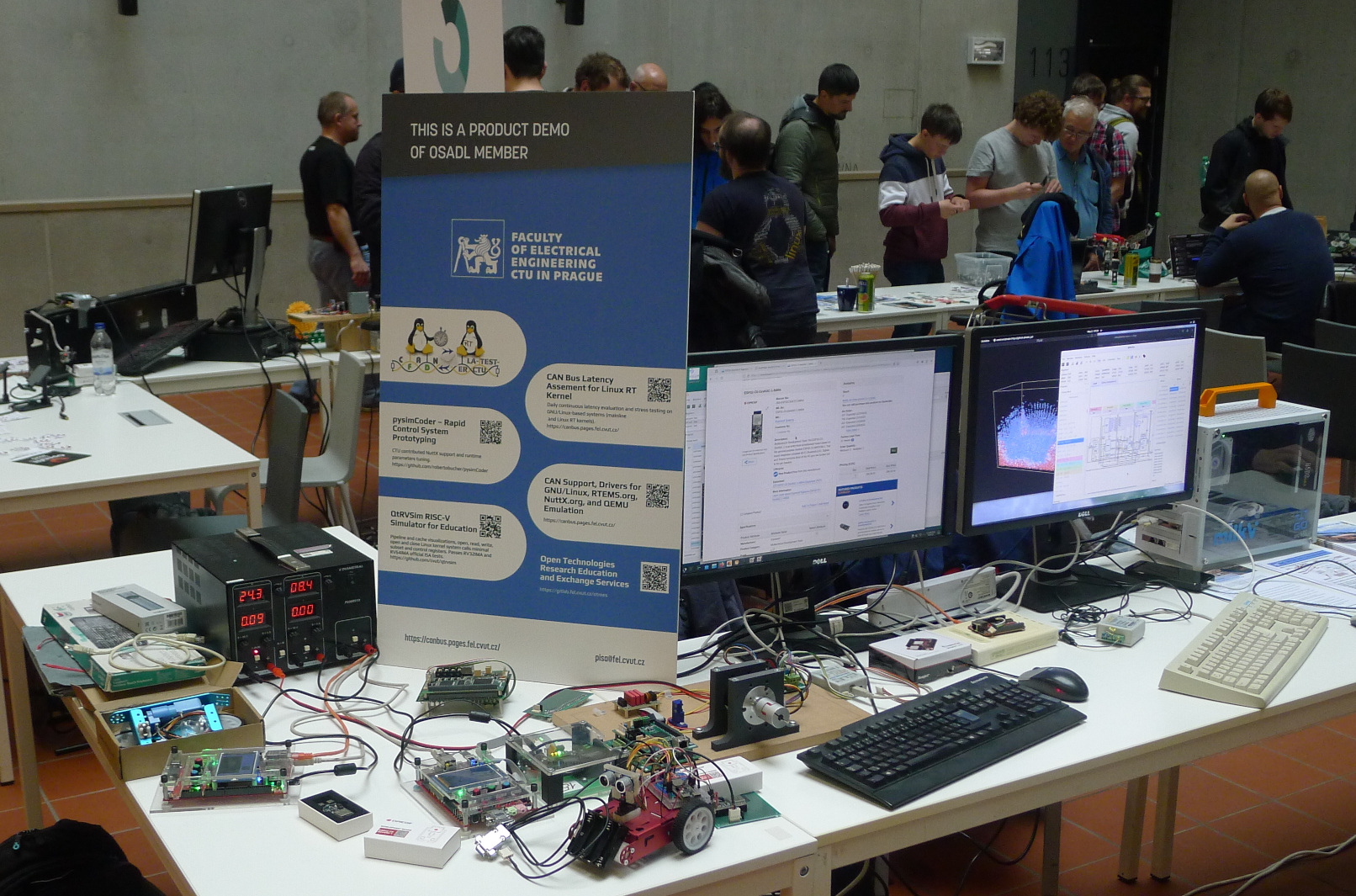
ppisaOTREES #cvut booth at #LinuxDays 2025 presenting our CAN/CAN FD projects for #Linux, #NuttX, #FPGA and #RTEMS. SaMoCon motion control platform driven by pysimCoder rapid prototyping solution for #NuttX with online monitoring and parameters tuning and update uploads through silicon-heaven and NXboot integrated in the frame of Štěpán Pressl’s #GSoC 2025 (will be presented in detail on NuttX Workshop October 16 and 17). More on the booth: #Espressif based kits running NuttX (ICE-V Wireless, see our PMSM project, #ESP32C6 with M-bot platform), AMD/Xilinx Zynq MZ_APO running Linux and #RTEMS, PolarFire SoC, Milk-V Pioneer 64 core 64-bit #RISCV system running #QtRvSim (for CompArch education), #CHROMuLAN data acquisition over uLAN driver, LX_RoCoN system used for ESA projects and lot more to see at our booth.
 1
4
8
1
4
8
Pavel Pisa
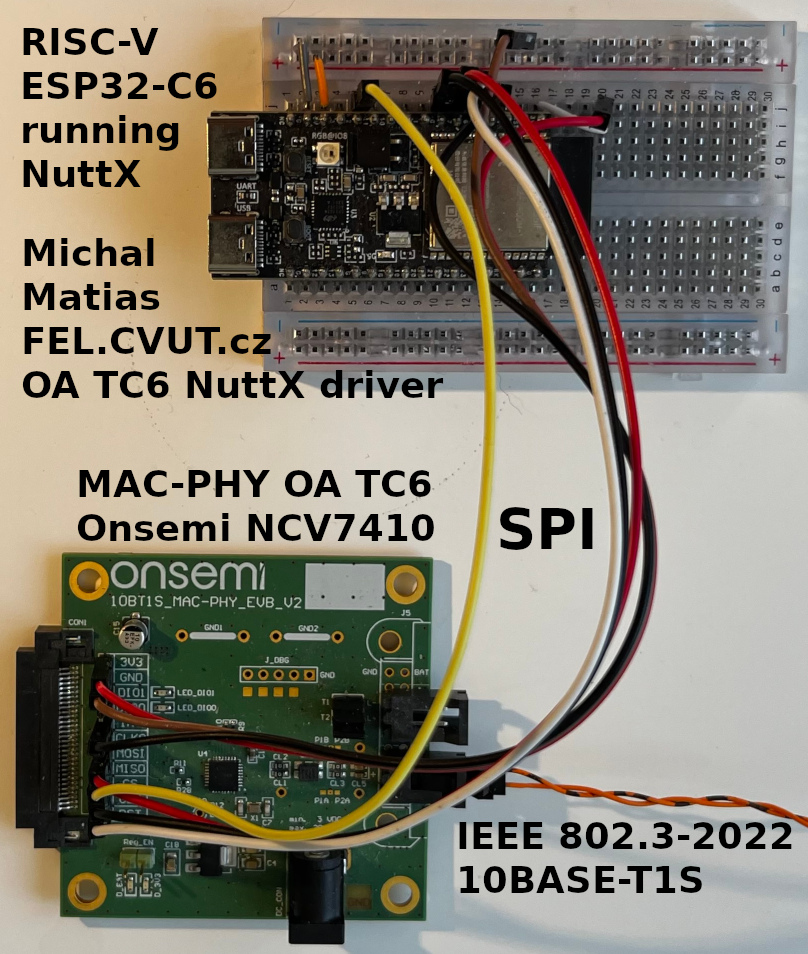
ppisa#NuttX Support for IEEE 802.3-2022 10BASE-T1S/L #Ethernet using Open Aliance SPI MAC-PHYs implemented by Michal Matias from #CVUT in frame of #GSoC2025 has been fully merged into NuttX mainline. The common part resides at drivers/net/oa_tc6. #ESP32C6 mapping and mapping for SAVM71-Xplained Ultra are good examples for straightforward extension to other MCU and board NuttX SPI interfaces. The accompanying plcatool for Physical Layer Collision Avoidance parameters configuration matching OA-TC14 specification is another contribution.
 1
5
7
repeated
1
5
7
repeated

Patrick Breyer
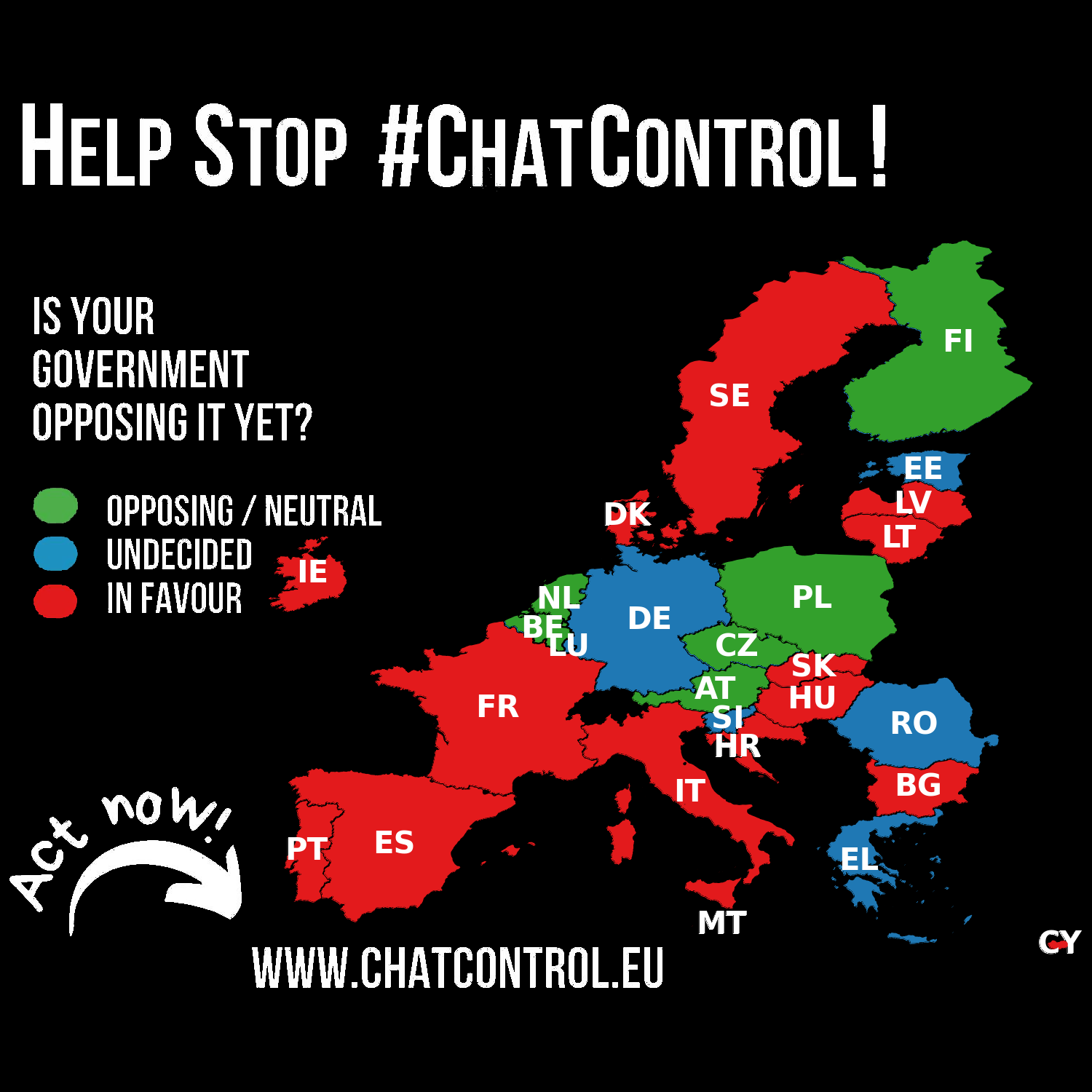
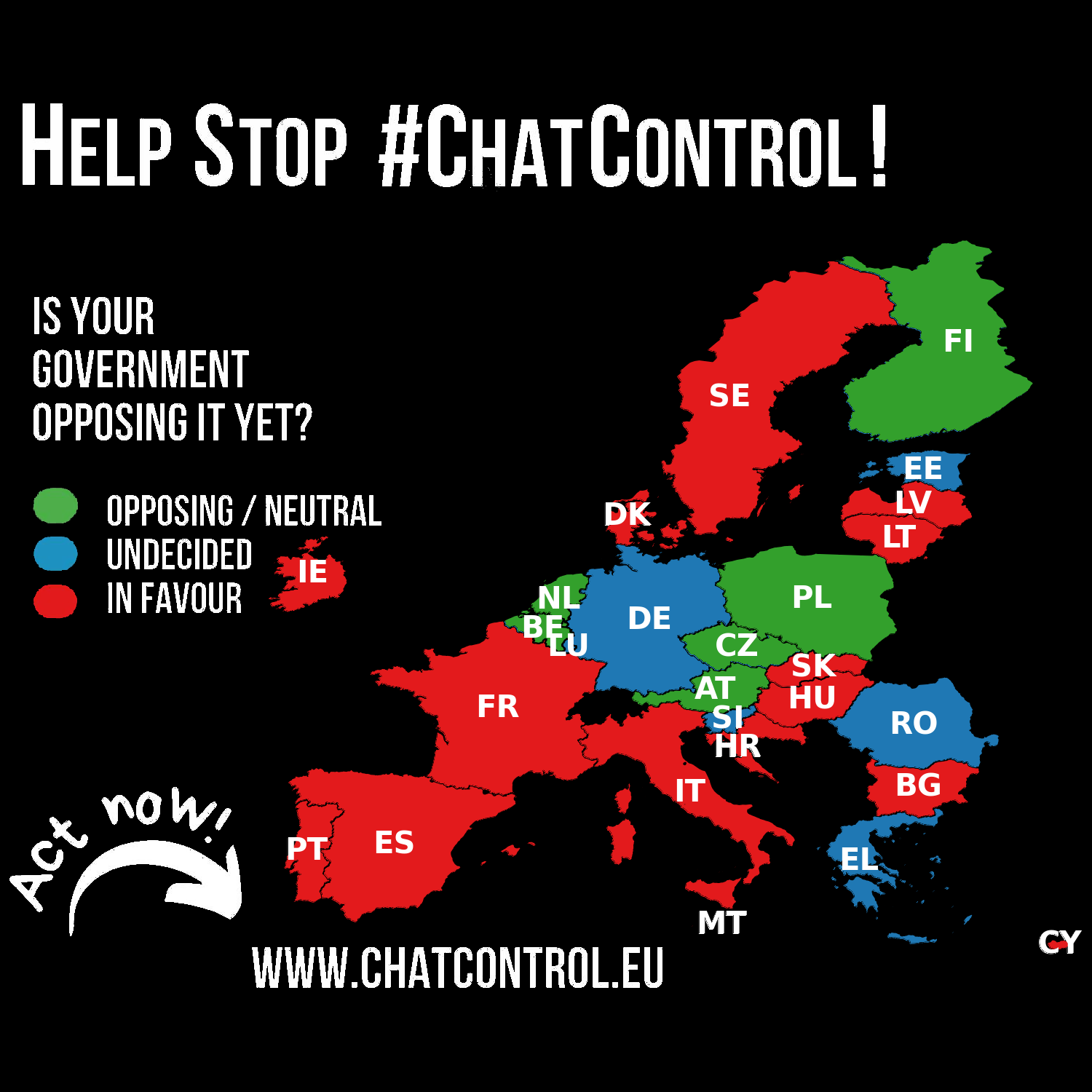
echo_pbreyer@digitalcourage.social🇩🇪Auch dank eures Engagements werden Belgien, Finnland und Tschechien der #Chatkontrolle im Oktober nicht zustimmen! Die Bundesregierung ist aber immer noch unentschieden, ob sie Briefgeheimnis und sichere Verschlüsselung retten will. Werdet jetzt laut: https://www.patrick-breyer.de/beitraege/chatkontrolle/#WasTun
 1
1
0
repeated
1
1
0
repeated
Patrick Breyer
echo_pbreyer@digitalcourage.social🇬🇧Public pressure works: Belgium, Finland & Czechia will NOT approve the #ChatControl mass surveillance law in October. But other governments whose vote is crucial are still on the fence. Urge them to protect our digital privacy and encryption now: https://www.patrick-breyer.de/en/posts/chat-control/#WhatYouCanDo
 0
7
0
0
7
0
Pavel Pisa
ppisa
0
0
0
repeated
Jonathan Corbet
corbethttps://fossforce.com/2025/08/groklaw-domain-hijacked-site-now-serving-crypto-content/
4
14
18
repeated

YosysHQ
yosyshq@fosstodon.orgIn our latest guest blog post, Matt Young introduces an Automated Triple Modular Redundancy EDA Flow for Yosys!
https://blog.yosyshq.com/p/tamara-towards-a-triple-modular-redundancy-pass-for-yosys/
0
5
0
repeated

Karl Fredrik 🦊
kfh@chaos.socialHot take: for critical infra, all firmware running on devices operated by public entities should be compiled and audited by these public entities.
Vendors should be required to supply source code and assist in compilation, flashing and verification; but the operator should have the means to introspect and verify any part of such deliveries independently.
Then this entire mess of a Polish train manufacturer never could have gone off the rails.
0
6
0
Pavel Pisa
ppisa@ljs @vbabka Thanks to both. Yes, I remember to read about new/concurrent/RCU friendly VMA tree at #lwn some time ago, I try fit more letters in the triangle, on the other hand R-B tree is something which students know… but showing maple can be motivation to search for more modern data structures in their future projects, I mention user-space RCU, cuckoo hashing from Knot DNS as well as others.
struct radix_tree_root page_tree; /* radix tree of all pages */
Good catch, it seems to have gone in 4.17 kernel, when it has been renamed to
struct radix_tree_root i_pages;
and it has been changed to struct xarray in 4.20. So this is evolution.
So it should be updated to be modern.
VPFN (virtual page frame number) and physical (P)PFN is used by me to distinguish what is view and meaning of address bits before and after MMU translation. It highlights that translation cares only about page sized frames no full addresses. It seems that it is not only mine local invention - used even on WikiBooks/The_Linux_Kernel/Memory.
The goal is to provide mainly an overall picture not details to start hacking and contributions to the kernel so if it is “roughly” appropriate is important. But if some students are attracted to contribute to Linux it would be great outcome. We have more students contributing to #NuttX which is lower bar for starting. But some have contributed drivers to Linux as well.
0
0
1
Pavel Pisa
ppisa@ljs Congratulation to the book publication. I hope to find some time one day and look at it myself or at least, will be able to make it available to my students with help of the #cvut library.
I have plea for you and @vbabka , I prepare for the next round of the Advanced Computer Architectures course. It is focused mainly to basic knowledge about progress from pipelined execution (basic course) to the super-scalar one in nineties to understand even later designs including GPUs, NUMA, etc. But I include even some amateur glimpse how is memory used in real system which is based on my already dated wander through Linux kernel sources. I would be very happy if you find time to look at the diagram on the slide 114 of the Lecture 6 and provide me feedback if there is something which is not true or have been changed considerably so I should correct it to not mislead my students. There are some more slides around where your expert feedback can save students from misleading information as well.
0
0
1