
Jarkko Sakkinen
jarkkoClosed my tpm-rs bug because I do not want to contribute to that project: https://github.com/tpm-rs/tpm-rs/issues/71#issuecomment-2171360982
Why? I think mine is better or will grow so much better than this. It is more idiomatic #Rust, and generally less layered and more lean and mean ;-)
I will review merge requests for mine tho, on the basis of common sense and code quality tho: https://gitlab.com/jarkkojs/tpm2_library/-/issues
 1
1
 1
1
 0
0
Jarkko Sakkinen
jarkko
0
0
0
Jarkko Sakkinen
jarkko@cgwalters @fale BTW, is the Fedora version up to date or would it be more advisable at this point to build from upstream (0.1.11)? Or is there a more bleeding edge copr for this work?
I have personal interest for this because to this day I’ve used libvirt for development environments and qemu-system-* for more automated QA [1]. For the former use case this might be my entry to popular “development containers” ;-) So I might be even willing to fix some issues along the way, if I encounter any.
I’m more of a “allow list” than a “deny list” type of person, and thus Linux containers have felt to me quite bad to this day, to be honest.
<personal-and-extremely-subjective-opinion> Docker is a great example of a successful duct tape product to fix something broken to appear as unbroken ;-) Market was formed by bad design decisions in kernel (emphasis on subjectivity of this opinion) [2]. </personal-and-extremely-subjective-opinion>
[1] https://gitlab.com/jarkkojs/linux-tpmdd-test [2] Mainly speaking about the “evil net of namespaces”, which is a mess. I think Cgroups in its second iteration is quite good actually for what it does.
0
0
0
Jarkko Sakkinen
jarkkoI should have put my words better but does it use like same tricks and ideas still, like e.g. using DAX as a tool to bypass page cache of the guest kernel? Does this have some new ideas in the nitty gritty details level? Obviously heavy use of virtio like anything in this part-container/part-vm space...
2
0
0
Jarkko Sakkinen
jarkko
0
0
0
Jarkko Sakkinen
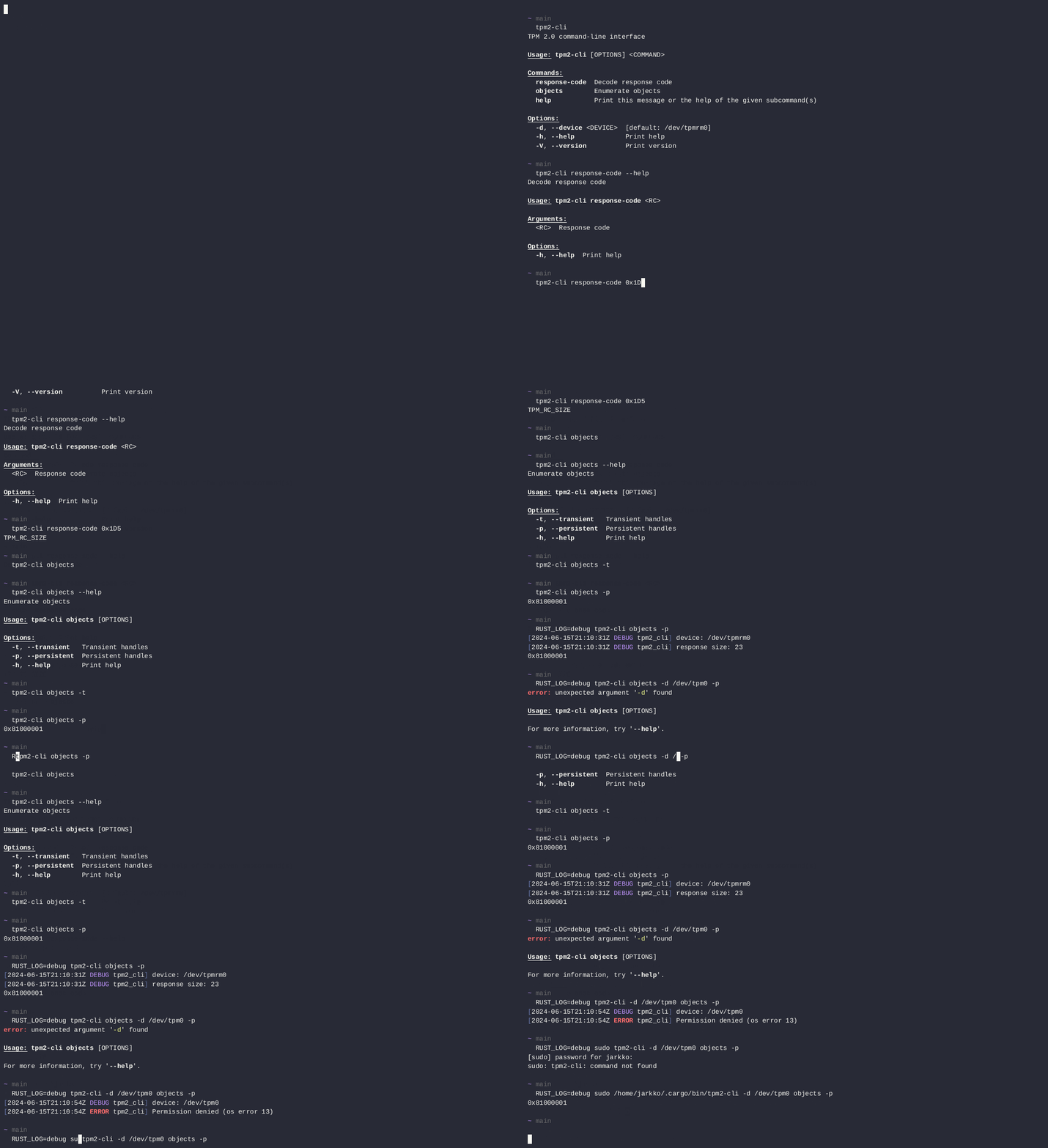
jarkkoTPM2 command encoding with #bincode and #serde:
            let options = DefaultOptions::new()
                .with_fixint_encoding()
                .with_big_endian();
            buf.extend(&options.serialize(&(Tag::NoSessions as u16)).unwrap());
            buf.extend(&options.serialize(&22_u32).unwrap());
            buf.extend(
                &options
                    .serialize(&(CommandCode::GetCapability as u32))
                    .unwrap(),
            );
            buf.extend(&options.serialize(&(Capability::Handles as u32)).unwrap());
            buf.extend(&options.serialize(&HR_PERSISTENT).unwrap());
            buf.extend(&options.serialize(&1_u32).unwrap());
Jarkko Sakkinen
jarkko 0
0
0
repeated
0
0
0
repeated

Jarkko Sakkinen
jarkko
0
0
0
Jarkko Sakkinen
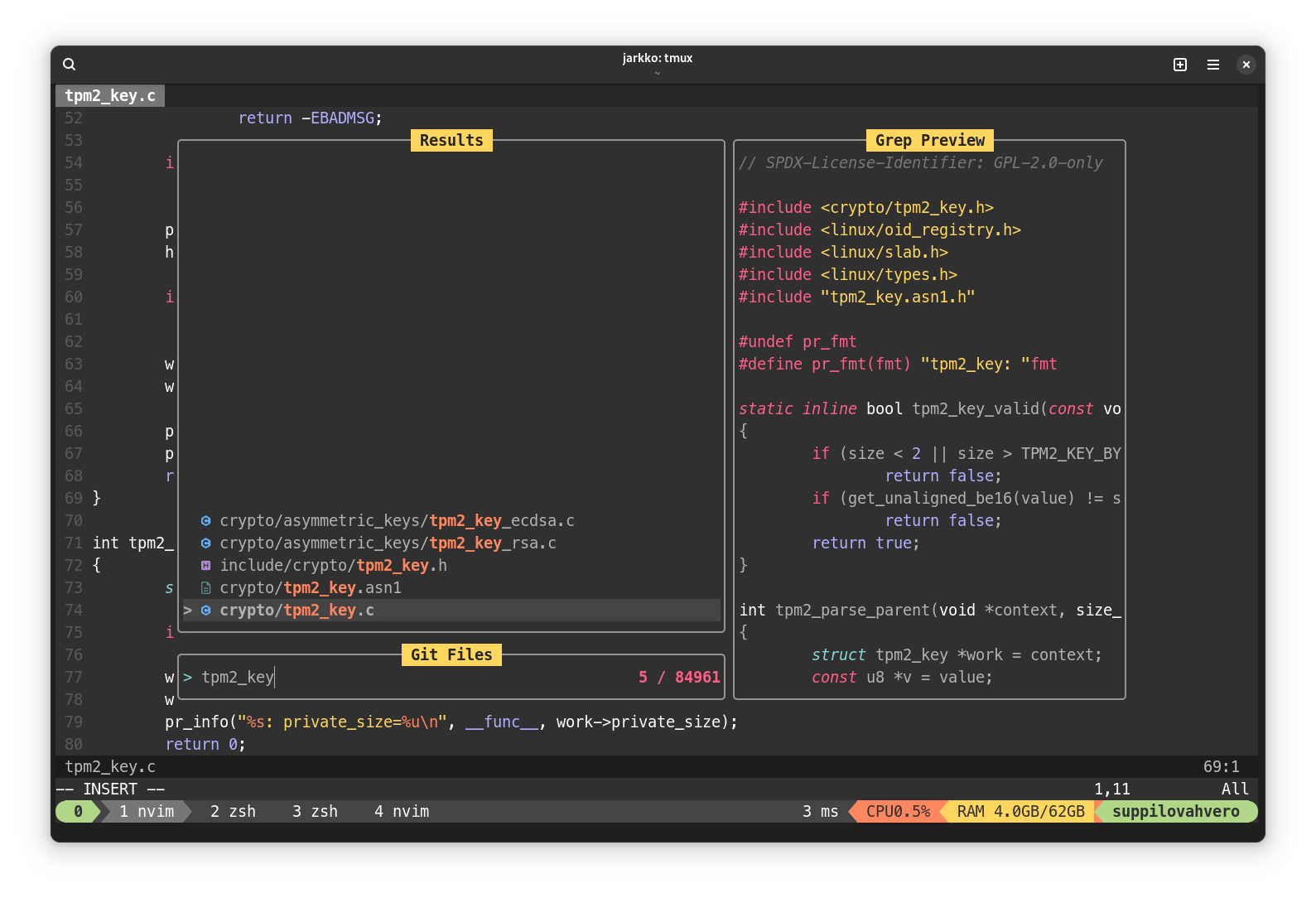
jarkkoThen editor and analyzer could have:
1. A better memory and caching strategy.
2. Both faster performance and lower operation latency.
#LSP is IMHO is exactly like the worst ideas of lrzsz modified to work as a language analyzer.
0
0
0
Jarkko Sakkinen
jarkko
1
0
0